
Winter crop production in NSW forecast to increase
Compiled by Melissa Blewitt
Winter crop production in NSW was forecast to increase by 50 per cent to 16.9 million tonnes in 2024–25 to the third highest production on record, according to the Australian Bureau of Agricultural and Resource Economics and Sciences (ABARES) Australian Crop Report (September Edition).
This is 43 per cent above the 10-year average to 2023–24 and represents a 12 per cent upwards revision from the June 2024 Australian crop report, www.agriculture.gov.au says.
“This improvement in production prospects follows high levels of soil moisture at the time of planting and average to above average rainfall in central and northern New South Wales throughout winter,” the Australian Crop Report (September Edition) on www.agriculture.gov.au says.
“The three-month rainfall outlook (issued by the Bureau of Meteorology on 22 August 2024) suggests a 50 to 65 per cent chance of above average rainfall for most cropping regions in New South Wales. This is expected to continue to support high yield potentials throughout spring.
“Winter crop yields are forecast to rise by 28 per cent to 2.62 tonnes per hectare in 2024–25, 30 per cent above the 10-year average to 2023–24.
“Average to above average soil moisture levels across New South Wales throughout winter, combined with the favourable rainfall outlook for spring, are expected to support increased yield prospects. However, yield prospects in southern cropping regions will be highly reliant on adequate and timely rainfall to realise current yield expectations due to the drier start to the season.
“Area planted to winter crops in New South Wales is forecast to increase by 17 per cent to 6.4 million hectares in 2024–25, the third highest planted area on record. This is 17 per cent above the 10-year average to 2023–24 and represents a six per cent upwards revision from the June 2024 Australian crop report.
“Favourable seasonal conditions at the time of planting led to area increases for all winter crops, with many expanding into regions not normally sown to winter crops such as northwest New South Wales.
“Chickpea plantings are estimated to have increased by 133 per cent showing the largest year-on-year percentage increase among winter crops in New South Wales this season. The increase in area planted is due to the Indian government’s announcement of a tariff free period for Australian chickpea exports. This saw an increase in Australian chickpea export prices and incentivised increased plantings.
“The increase in wheat and barley area reflects above average subsoil moisture across much of New South Wales at the time of planting and favourable rainfall throughout winter. The increase in wheat and barley area includes those areas that did not get planted last season due to dry conditions.
“Drier conditions during autumn coupled with lower soil moisture levels in some southern cropping regions in New South Wales – where canola is predominantly grown – limited canola area expansions across the state to a seven per cent year-on-year increase, the lowest expansion of all New South Wales winter crops.
“Despite this lower relative rate of increase, the canola area forecast represents the third highest on record for the state due to favourable planting conditions in central New South Wales.”
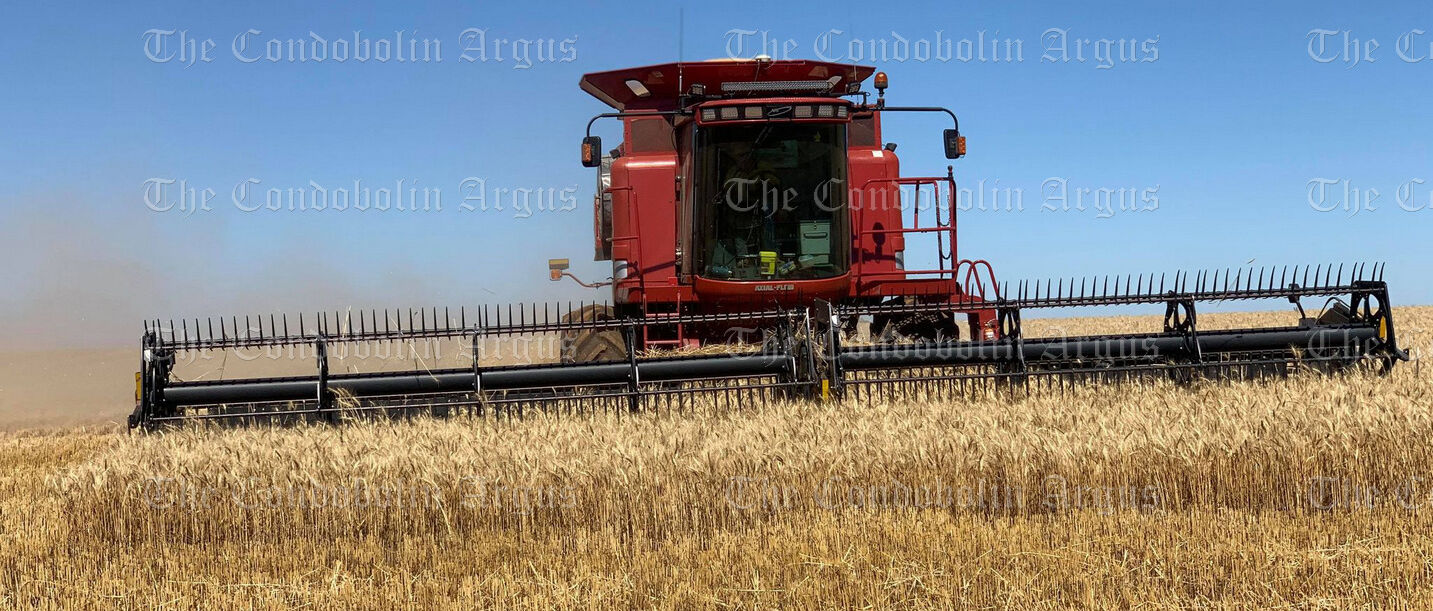
ABOVE: Winter crop production in NSW is forecast to increase by 50 per cent to 16.9 million tonnes in 2024–25, according to the (ABARES) Australian Crop Report (September Edition). Image Credit: Melissa Blewitt.

Latest News
Etiwanda rams average $3,046
By Melissa Blewitt Etiwanda Rangeland Raised, located near Cobar, recorded [...]
Successful Fete and Flower Show
By Hayley Egan The Lake Cargelligo Anglican Parish Fete and [...]
Strong demand at Rockingham Santa Gertrudis bull sale
By Melissa Blewitt Strong demand for Santa Gertrudis genetics saw [...]
Condobolin High School teachers
By Melissa Blewitt Two Condobolin High School educators have reached [...]
Gone Fishing Day A Success
By Hayley Egan On Saturday 10th October, the Bland Shire [...]
Beautiful Gardens on Display
By Hayley Egan On Saturday 3rd October, entries for the [...]


